Quick Answer: An arraignment in New York is usually a defendant’s first appearance before a judge after an arrest. The judge reads the charges, explains the defendant’s rights, including the right to an attorney, and makes sure the defendant has a lawyer. The defendant typically enters a plea, often not guilty at this early stage, and the judge decides whether the defendant will be released and on what conditions. What happens can vary by charge and court, so it helps to speak with a defense attorney as early as possible.
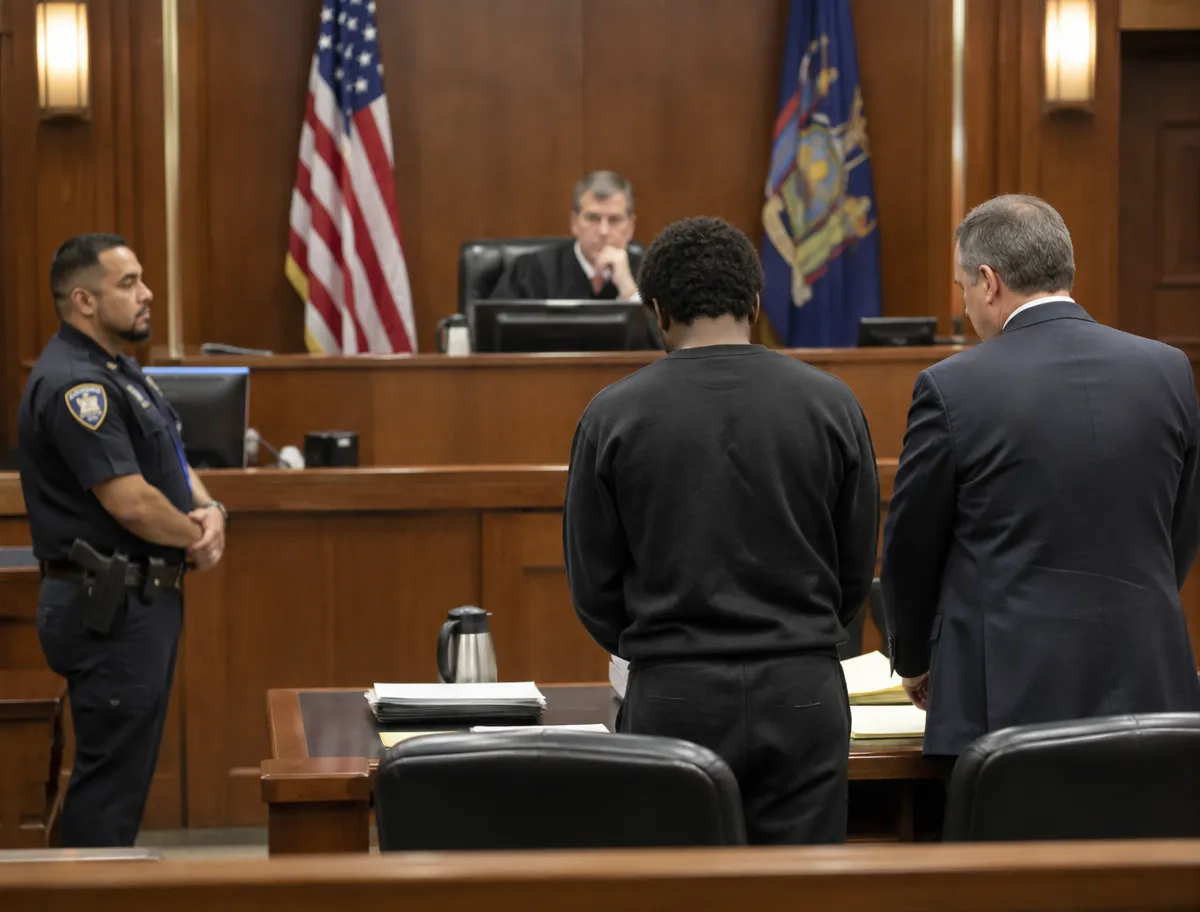
Arraignment in New York marks a defendant’s first court appearance before a judge after arrest. The judge reads the charges, explains rights including counsel, and sets bail or release conditions. Defendants enter a plea of guilty or not guilty. Carr Saglimben LLP represents clients across Cattaraugus, Allegany, and Chautauqua counties at these proceedings.
What Are the Key Takeaways About New York Arraignments?
- The arraignment is the first official court proceeding following arrest in New York.
- Defendants learn their charges and constitutional rights, including the right to counsel at arraignment.
- The judge informs defendants of their right to trial and appointed attorney eligibility.
- Arraignment establishes the foundation for a defendant’s entire criminal justice system journey forward.
What is an arraignment in New York?
An arraignment in New York is the first official court proceeding a defendant attends after an arrest. This hearing marks the initial time a person appears before a judge in a courtroom setting. The arraignment is not a minor formality. It sets the stage for a defendant’s entire journey through the criminal justice system.
What happens to the defendant at this first hearing?
At the arraignment, the judge formally tells the defendant what the charges are against them. The court also explains the defendant’s rights during this proceeding. These rights include the right to a trial and the right to have an attorney appointed if the defendant cannot afford one. Understanding these rights at this early stage is critical for protecting a person’s legal position.
What rights does the defendant learn about?
The court informs the defendant of several fundamental legal protections at the arraignment. The defendant learns about the right to trial, meaning a jury or judge will hear the evidence before any conviction. The defendant also learns about the right to have an attorney appointed at no cost if they lack the money to hire one. These rights form the foundation of a fair legal process.
Key elements of a New York arraignment:
- Formal charge reading: The judge reads the official charges filed against the defendant
- Rights notification: The court explains the right to trial and the right to appointed counsel
- Legal representation: The judge ensures the defendant has an attorney or appoints one
- Case foundation: This hearing establishes the procedural path for all future court dates
When does an arraignment happen after arrest?

An arraignment in New York is the first court appearance after an arrest, and it must happen quickly. New York law generally requires that a person who is arrested be brought before a judge without unnecessary delay. This proceeding does not occur immediately at the scene of an arrest. Instead, several intervening steps take place before a defendant stands before a judge.
What legal rules govern the timing?
New York’s Criminal Procedure Law sets the rules for arraignments. The process follows a defined set of rules that dictate when and how the proceeding occurs. A defendant does not go directly from arrest to a criminal trial. The arraignment is a mandatory intervening step that must happen first.
Where does the arraignment take place?
The arraignment process takes place in a courtroom, in front of a judge. This setting ensures the proceeding follows the specific rules and requirements established under New York law. The courtroom environment provides a formal structure for reading charges and addressing bail.
What factors affect how quickly an arraignment occurs?
Several elements influence the timing of an arraignment:
- Court schedule and availability: The court must have a judge available to hear the case. Arrests made late at night, on weekends, or on holidays can affect when a judge is available.
- Processing time: Law enforcement must complete booking and paperwork before the arraignment can proceed.
- Defendant’s condition: If a defendant requires medical clearance or is intoxicated, the arraignment may be delayed until the person is fit to appear.
The arraignment represents the first formal step in the criminal justice process. Understanding when this proceeding happens helps defendants and their families prepare for what comes next.
📞 Facing an Arraignment in Cattaraugus or Allegany County? Getting a lawyer involved before the first court date can make a real difference. Contact Carr Saglimben LLP for a free, confidential consultation.
What happens when you enter a plea?

Entering a plea is the moment a defendant formally answers the criminal charges in a New York courtroom. After the judge reads the charges, the defendant must respond by pleading guilty or not guilty. This response sets the entire tone for the case that follows.
What happens at an arraignment in New York begins with the judge explaining the charges and the defendant’s rights. The court ensures the defendant has an attorney, either hired or assigned. Once legal representation is confirmed, the judge asks for the plea. The defendant then answers the charges directly to the court.
What are the plea options and what do they mean?
A defendant faces a straightforward choice at this stage. The decision carries immediate and long-term consequences.
- Guilty plea: The defendant admits to the charges. The case then moves toward sentencing.
- Not guilty plea: The defendant denies the charges. The court then schedules a future date for a hearing or trial.
- Plea bargaining: Before entering a plea, defense counsel and the prosecutor may discuss settling the case without a trial. This negotiation happens before the formal plea.
What happens after the plea is entered?
The court’s next step depends entirely on the plea entered. A guilty plea leads to sentencing, where the judge determines the appropriate punishment. A not guilty plea keeps the case moving toward a hearing or trial date.
What happens at an arraignment in New York does not end with the plea itself. The judge also addresses bail, issues orders of protection, and sets conditions for release. These decisions affect the defendant’s freedom while the case proceeds.
Why does the plea decision matter?
The plea is not a formality. It is a strategic decision that shapes every subsequent step in the case. A guilty plea waives the right to trial. A not guilty plea preserves all legal options, including the possibility of dismissal or reduced charges later.
What happens at an arraignment in New York also includes the defendant’s right to remain silent beyond the plea itself. Anything said during this appearance can be used later. This is why having an attorney present matters before answering the charges.
What should a defendant do at the plea?
A defendant should listen carefully to the judge and follow defense counsel’s guidance. The judge will ask directly how the defendant pleads. The answer should be clear and unambiguous. A defendant should never feel rushed into a decision about the plea.
What happens at an arraignment in New York ultimately comes down to one question: guilty or not guilty. The answer determines whether the case ends at sentencing or continues toward trial. Understanding this moment helps defendants and their families prepare for what comes next.
What bail decisions happen at arraignment?
A judge makes the bail decision at the arraignment in New York. This decision determines whether a defendant remains in custody or returns home while the case proceeds. The judge considers the charges, criminal history, and flight risk before setting bail.
The arraignment is not merely a formality. It is a foundational part of ensuring a person’s rights are upheld as they face the criminal justice system. During this procedure, the charges against the defendant are formally read, and decisions about bail and further court dates are made.
What bail options does a judge consider?
A judge in New York has several bail options at arraignment:
- Release on recognizance (ROR) – The defendant is released without paying money, based on a promise to return to court.
- Release with non-monetary conditions — The defendant is released with conditions set by the court, such as check-ins or travel limits.
- Bail — For certain qualifying charges, the judge may set bail as a condition of release.
Which options are available depends heavily on the specific charge and the person’s history, and New York’s bail rules have changed several times in recent years. An attorney can explain what applies in a particular case.
How does a judge set the bail amount?
New York law generally directs judges to choose the least restrictive option that reasonably ensures the defendant returns to court. The judge weighs factors such as the severity of the charges, prior failures to appear, and ties to the community. Understanding the arraignment process can help defendants and their families navigate what is often a challenging and stressful time. Given the complexities and the potential consequences of the arraignment process, it is highly advisable to contact an experienced New York criminal lawyer who can provide guidance and protect rights at this critical stage.
Why do you need a lawyer at arraignment?
The arraignment is vitally important to any criminal case, even though it occurs very early in the process. An experienced criminal lawyer protects a defendant’s rights and works toward the best possible outcome from the first court appearance. Without legal representation, individuals risk making critical mistakes that affect the entire case.
What rights are at stake during arraignment?
At the arraignment, the court informs the defendant of the charges and their constitutional rights. These rights include the right to trial and the right to have an attorney appointed if the defendant cannot afford one. The judge also makes decisions about bail and release conditions during this hearing. A lawyer ensures these rights are fully protected and that the defendant understands each step.
How does a lawyer change the outcome?
- Charge negotiation: Defense counsel may discuss plea bargaining with the prosecutor before the defendant enters a plea
- Bail advocacy: A lawyer argues for the most favorable release conditions
- Plea guidance: The attorney explains the consequences of pleading guilty versus not guilty
- Record protection: Early legal intervention prevents damaging statements that prosecutors can use later
Given the complexities and potential consequences of the arraignment process, having legal representation is critical. Carr Saglimben LLP offers free initial consultations to help individuals understand their options when facing serious legal matters like an arraignment. The firm’s attorneys bring trial experience and knowledge of New York criminal procedure to every case.
Frequently Asked Questions
What is an arraignment in New York?
An arraignment is a defendant’s first official court proceeding after arrest in New York. A judge reads the charges and explains constitutional rights. This hearing establishes the foundation for the entire criminal justice journey ahead.
What rights does a defendant learn about at arraignment?
The judge informs the defendant of the right to trial and the right to an appointed attorney if they cannot afford one. The court also ensures the defendant has legal representation during the proceeding.
When must an arraignment occur after arrest?
New York law generally requires an arrested person to be brought before a judge without unnecessary delay, though the exact timing depends on the circumstances. The arraignment is a mandatory courtroom step that happens before any trial.
Should I talk about my case at the arraignment?
Generally, no. Anything said in court or to others can potentially be used later, so it is usually best to let your defense attorney speak for you and to discuss the details of your case only with your lawyer.
Can an order of protection be issued at arraignment?
It can. In some cases, a judge may issue an order of protection at the arraignment. The terms depend on the charge and the circumstances, and an attorney can explain what an order means and how to comply with it.
TL;DR — New York Arraignments at a Glance
- An arraignment is usually the first court appearance after an arrest in New York.
- The judge reads the charges, explains your rights, and makes sure you have a lawyer.
- A plea is entered, and the judge decides whether and how you will be released while the case continues.
- Release options depend on the specific charge and your history; the rules can change.
- Avoid discussing your case in court or with others; let your attorney speak for you.
- Next step: Contact Carr Saglimben LLP for a free, confidential consultation before your court date.
Related Resources
- DUI and DWI Defense
- Olean, NY Office
- What Every Criminal Defendant Should Know
- How Do I Know If I Need a Lawyer?
- What to Expect at Your First Consultation With a Lawyer
Get a Free, Confidential Criminal Defense Consultation
In closing, understanding arraignment procedures empowers you to navigate the criminal justice system with clarity and confidence. The process sets the foundation for your entire case, making skilled legal representation at this critical juncture invaluable. When you face arraignment charges, having an experienced advocate by your side ensures your rights remain protected from the outset and positions you to pursue the strongest possible defense strategy moving forward.
Contact Carr Saglimben LLP today for a free, no-obligation consultation about your arraignment and next steps.
Legal disclaimer: This article provides general information about arraignments in New York and is not legal advice. Procedures, release rules, and outcomes vary by court and by case, and the law can change. Reading this article does not create an attorney-client relationship. Speak with a licensed New York attorney about your specific situation.
About Carr Saglimben LLP: Carr Saglimben LLP represents clients across Western New York and Northwestern Pennsylvania, including Cattaraugus, Allegany, and Chautauqua Counties. The firm handles criminal defense, DUI/DWI, family law, and bankruptcy matters and offers free initial consultations.